
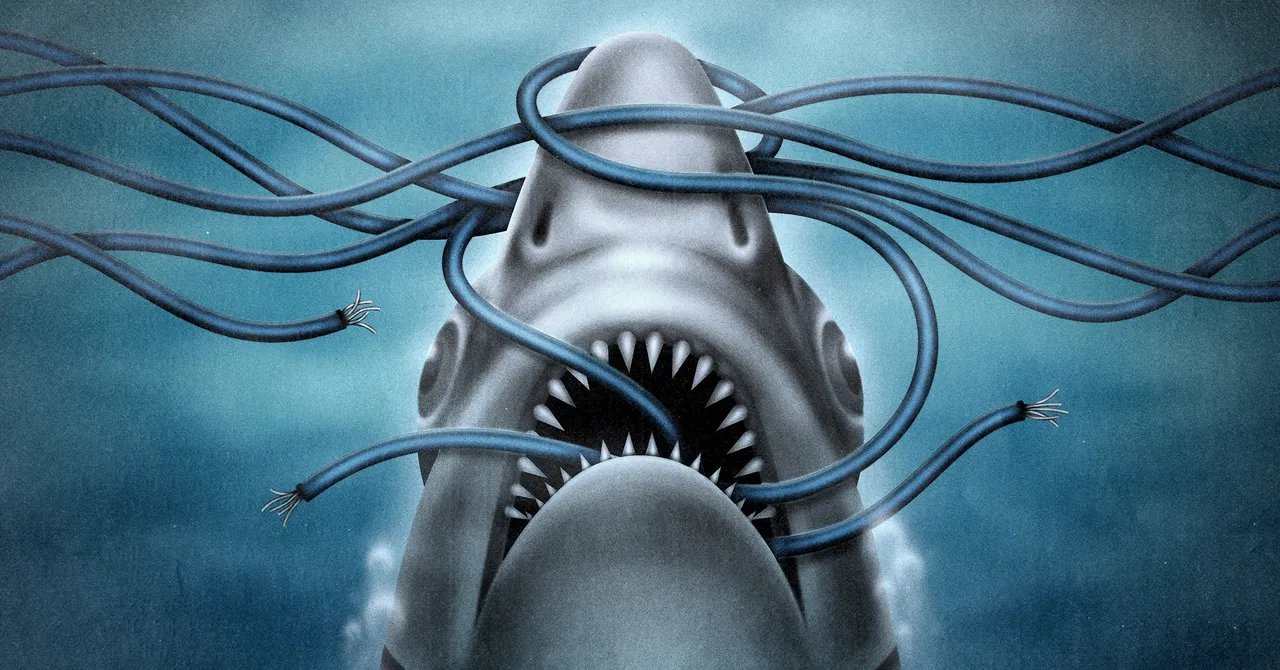
The world’s first transoceanic fiber-optic cable, TAT-8, is being retired after 40 years of making global internet possible.
.jpg)
New York: Sharks did not destroy the internet. Large fish with soft bone did not bite through the cables that carry our messages across the ocean. When cables hang in water, a shark might touch them. Sometimes sharks jump at cables pulled from water. But sharks cannot really bite cables. You would have to cover cables with fish first, like hiding medicine in cheese for a dog.
Rats might hurt cables on land. Their front teeth never stop growing, so they like to chew on cables to make them shorter. But people never ask about rats. My friend said, “Sharks make you sound cool, but rats make you sound like you have a problem.”
Some people ask about satellites or, in Sweden where I live, about possible damage in the Baltic Sea. But shark bites get the most attention. This story began about 40 years ago with a special cable called TAT-8. TAT-8 made the idea of internet cables normal. Now it is ready to stop working. I spent time with workers who are pulling this cable off the ocean floor. The true story of ocean cables is about people, not attacks from sharks.
Light beams carry information through thin glass strings. Most people do not think about how we can now talk instantly to anyone. People who work with these cables feel insulted when others say we only notice them when they break. Millions of us walk around without thinking about this system because a few thousand people take care of it. Sometimes they work at sea, other times they fill out papers or buy long cables.
Let me clear up something else. Most people call them “internet cables,” but they were made for phone calls first. An English scientist named Alec Reeves helped create this. He also worked with mind reading. With these cables, voices turn into light, travel on thin glass strings, and turn back into voices at the other end. Maybe this is not so different from moving things with your mind.