
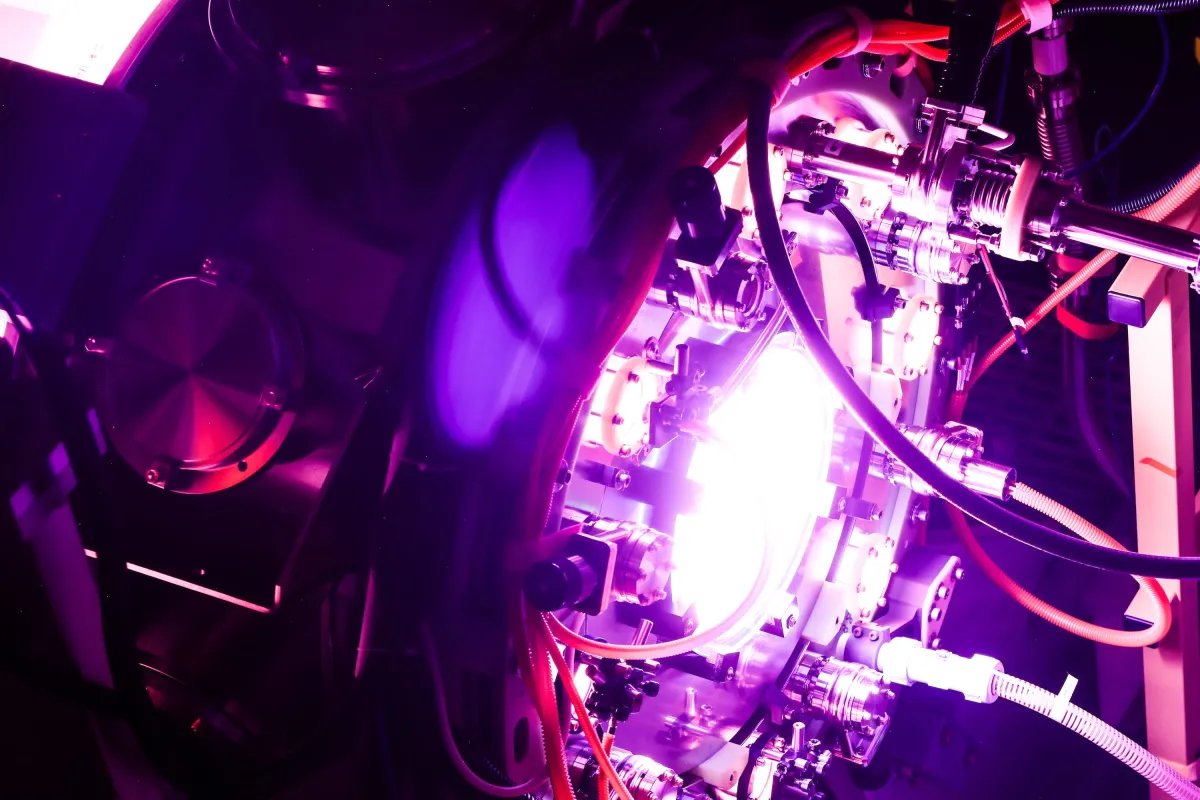
Helion fusion startup reaches 150 million degrees Celsius in its Polaris reactor, marking a key step toward commercial fusion power by 2028.

Everett, Washington: Helion announced Friday that its Polaris prototype reactor has reached 150 million degrees Celsius, three-quarters of the way toward what it needs for commercial fusion power.
The company’s reactor design uses an hourglass-shaped chamber where fuel turns into plasmas that magnets accelerate toward each other. When they merge and get compressed, temperatures jump to 150 million degrees in less than a millisecond. Helion is the first fusion company to use deuterium-tritium fuel, which helps increase fusion power output.
Helion is locked in a race with several other fusion startups that want to make clean energy. Most target the early 2030s to put electricity on the grid, but Helion has a contract with Microsoft to sell electricity starting in 2028. That power will come from a larger reactor called Orion that the company is currently building.
The company plans to eventually use deuterium-helium-3 fuel, which produces more charged particles that push against magnetic fields, making it better for their approach of generating electricity directly. Work is already underway to make their own helium-3 fuel, which is common on the moon but rare on Earth. Helion’s goal is to reach 200 million degrees Celsius for optimal power plant operation.