
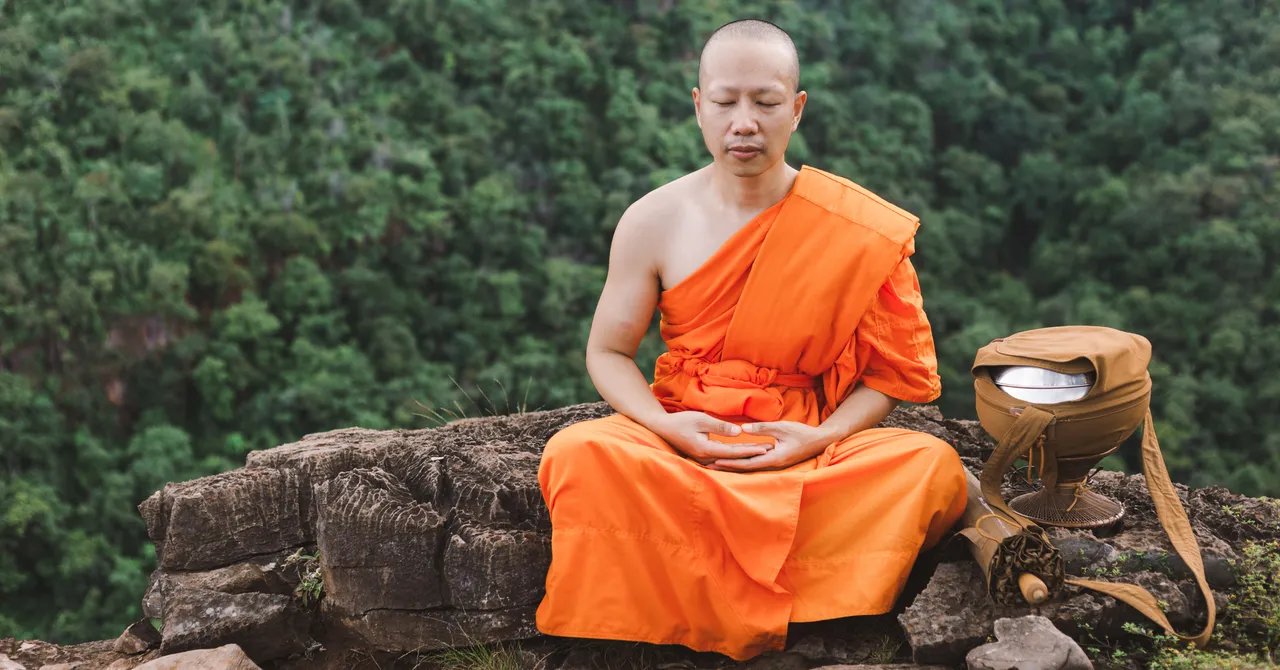
Researchers studied monks in Italy to understand how meditation affects brain activity and mental processes.

The researchers used special equipment called MEG (magnetoencephalography) to measure brain activity. This machine can track tiny electrical signals in the brain with great precision. The monks did two different types of meditation while the scientists recorded their brain signals.
One type called Samatha focuses on breathing and keeping attention on one thing. It’s like shining a flashlight in a narrow beam. The other type called Vipassana involves watching thoughts and feelings as they come and go. This is more like shining a wide flashlight beam around you.
The study showed that both kinds of meditation make the brain more complex and active compared to when people are just resting. The brain enters a special state that balances between being too ordered and too chaotic. This balanced state helps the brain work better at switching between tasks and remembering things.
The researchers found that Samatha creates a more focused state while Vipassana creates a more balanced state of mind. Both practices engage attention differently but make the brain work in richer ways.